Introduction
In today’s busy world, many people struggle to find time to visit a gym regularly. Work responsibilities, family commitments, travel, and financial constraints often make gym memberships difficult to maintain. Fortunately, achieving excellent fitness results does not require expensive equipment or access to a fitness center.
Home workouts have become increasingly popular because they offer convenience, flexibility, and effectiveness. With the right approach, you can build strength, improve cardiovascular health, burn fat, and increase endurance from the comfort of your own home.
This comprehensive guide will help beginners understand how to create an effective home workout routine, stay motivated, and achieve long-term fitness success.
Benefits of Home Workouts
Home workouts offer numerous advantages compared to traditional gym training.
Convenience
One of the biggest benefits is convenience. You can exercise anytime without commuting to a gym.
Cost Savings
Home workouts eliminate expenses related to:
Gym memberships
Transportation
Parking fees
Personal trainers
Time Efficiency
You can start exercising immediately without spending time traveling.
Privacy
Many beginners feel more comfortable exercising at home rather than in a crowded gym environment.
Flexibility
You can customize workouts according to your schedule and fitness level.
Understanding Physical Fitness
Fitness involves multiple components:
Cardiovascular Endurance
The ability of your heart and lungs to supply oxygen during physical activity.
Muscular Strength
The amount of force your muscles can produce.
Muscular Endurance
The ability to perform repeated movements without fatigue.
Flexibility
The range of motion available in your joints and muscles.
Body Composition
The ratio of fat mass to lean body mass.
A balanced fitness routine should address all these areas.
Essential Warm-Up Routine
Always warm up before exercising.
Benefits include:
Increased blood flow
Reduced injury risk
Improved performance
Better flexibility
5-Minute Warm-Up
Arm Circles
30 seconds forward and backward.
Jumping Jacks
1 minute.
High Knees
1 minute.
Leg Swings
30 seconds per leg.
Bodyweight Squats
15 repetitions.
Light Stretching
1 minute.
Beginner Home Workout Plan
Perform this workout 3–4 times per week.
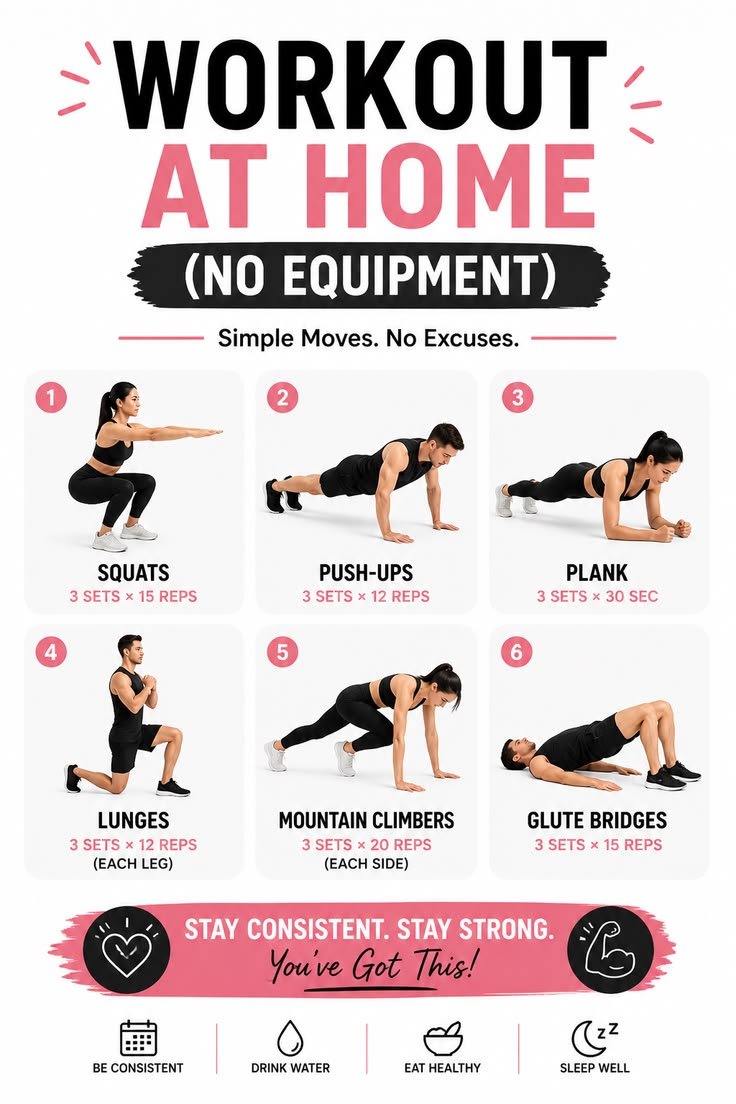
Bodyweight Squats
Target muscles:
Quadriceps
Glutes
Hamstrings
Instructions:
Stand with feet shoulder-width apart.
Lower your body as if sitting in a chair.
Return to standing position.
Perform:
3 sets of 15 repetitions
Push-Ups
Target muscles:
Chest
Shoulders
Triceps
Beginner modification:
Knee push-ups
Perform:
3 sets of 10 repetitions
Glute Bridges
Target muscles:
Glutes
Hamstrings
Core
Perform:
3 sets of 15 repetitions
Plank
Target muscles:
Core
Shoulders
Back
Perform:
Hold for 30–60 seconds
Repeat:
3 rounds
Lunges
Target muscles:
Legs
Glutes
Perform:
10 repetitions per leg
3 sets
Mountain Climbers
Benefits:
Cardio
Core strengthening
Fat burning
Perform:
30 seconds
3 rounds
Intermediate Home Workout Routine
After several weeks of consistency, increase intensity.
Circuit Training
Perform:
20 Squats
15 Push-Ups
20 Lunges
30 Mountain Climbers
45-Second Plank
Repeat:
4 rounds
Rest:
1 minute between rounds
Cardio Exercises at Home
Cardiovascular exercise improves heart health and burns calories.
Jump Rope
Benefits:
High calorie burn
Improved coordination
Enhanced endurance
Running in Place
Suitable for small spaces.
Burpees
Excellent full-body exercise.
Jumping Jacks
Great for beginners.
Stair Climbing
A highly effective cardio workout.
Core Strengthening Exercises
A strong core improves posture and athletic performance.
Bicycle Crunches
Perform:
20 repetitions
Leg Raises
Perform:
15 repetitions
Russian Twists
Perform:
20 repetitions
Plank Variations
Hold:
30–60 seconds
Building Muscle at Home
Many people believe muscle growth requires heavy gym equipment.
In reality, bodyweight training can be highly effective.
Key principles include:
Progressive Overload
Gradually increase:
Repetitions
Sets
Time under tension
Consistency
Train regularly.
Proper Nutrition
Consume sufficient:
Protein
Healthy carbohydrates
Healthy fats
Weight Loss Through Home Workouts
For fat loss:
Combine Cardio and Strength Training
This maximizes calorie expenditure while preserving muscle.
Maintain a Calorie Deficit
Consume fewer calories than you burn.
Stay Active Throughout the Day
Increase daily movement whenever possible.
Importance of Recovery
Recovery is essential for fitness progress.
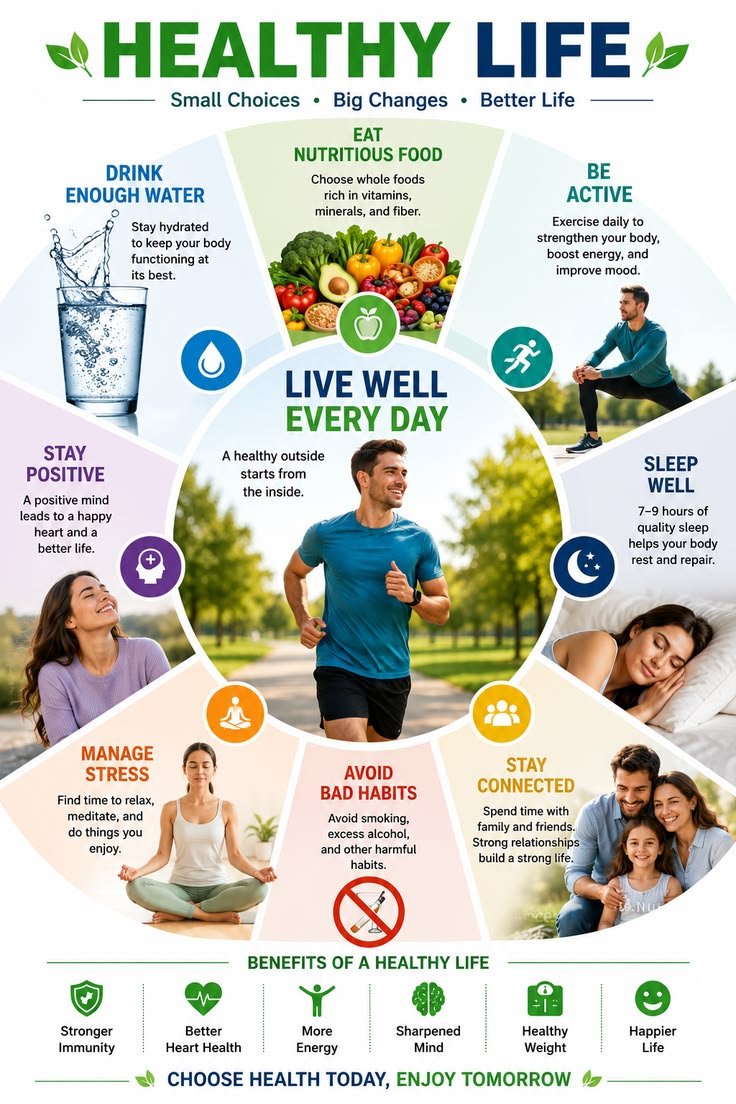
Get Enough Sleep
Aim for:
7–9 hours nightly
Stay Hydrated
Drink water before, during, and after workouts.
Take Rest Days
Allow muscles time to repair and grow.
Home Workout Equipment (Optional)
Although not required, certain equipment can enhance workouts.
Examples include:
Resistance Bands
Affordable and versatile.
Dumbbells
Useful for strength training.
Yoga Mat
Provides comfort and support.
Stability Ball
Helpful for core training.
Kettlebells
Effective for strength and cardio workouts.
Staying Motivated
Consistency is often the biggest challenge.
Set Clear Goals
Examples:
Lose 10 kilograms
Complete 20 push-ups
Exercise 4 days per week
Track Progress
Keep a fitness journal.
Create a Schedule
Treat workouts like important appointments.
Reward Yourself
Celebrate milestones appropriately.
Common Home Workout Mistakes
Avoid:
Skipping Warm-Ups
This increases injury risk.
Poor Form
Focus on technique before increasing intensity.
Inconsistent Training
Results require regular effort.
Unrealistic Expectations
Fitness improvements take time.
Neglecting Recovery
Rest is essential for progress.
Sample Weekly Home Workout Schedule
Monday
Full Body Strength Training
Tuesday
Cardio and Core
Wednesday
Active Recovery
Thursday
Full Body Strength Training
Friday
Cardio Workout
Saturday
Flexibility and Stretching
Sunday
Rest Day
Nutrition for Fitness Success
Exercise alone is not enough.
Focus on:
Protein Sources
Chicken
Fish
Eggs
Beans
Greek yogurt
Healthy Carbohydrates
Oats
Brown rice
Sweet potatoes
Healthy Fats
Avocados
Nuts
Olive oil
Vegetables
Consume a variety daily.