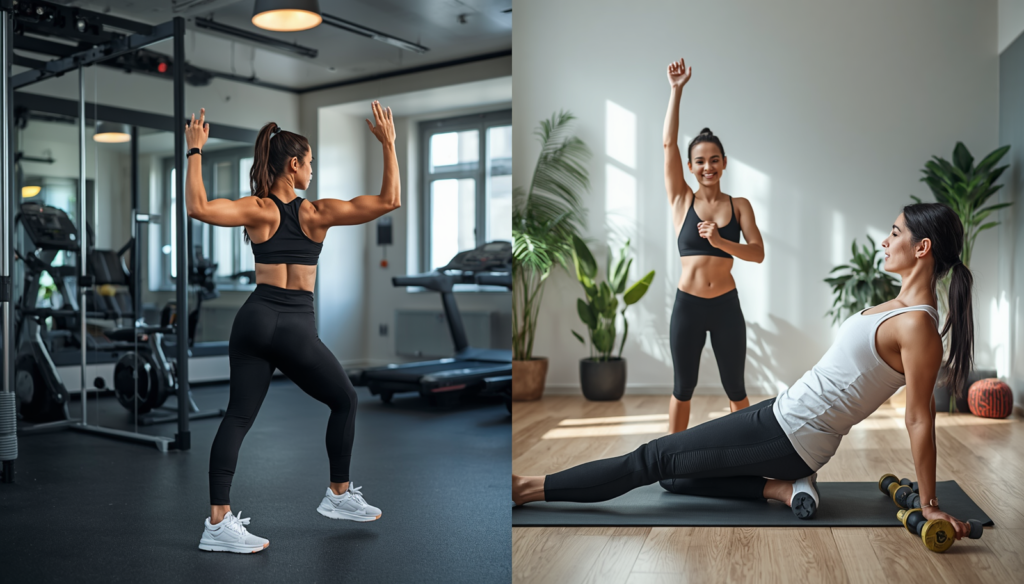

This article explains an effective weight loss program that combines gym and home workouts. It focuses on training structure, exercise selection, weekly planning, progression, recovery, and nutrition.
Weight loss happens when energy use is higher than energy intake. Gym workouts increase energy use through resistance training and machines. Home workouts maintain consistency when gym access is not available. Combining both creates a flexible system for fat reduction.
This program is designed for beginners who want structure without complexity.
How Weight Loss Works
Weight loss is based on energy balance.
- Energy intake comes from food
- Energy output comes from exercise and daily movement
When output is higher than intake, body fat reduces.
Role of Gym and Home Workouts
Gym workouts
Gym training provides:
- Resistance machines
- Free weights
- Structured progression
- Higher training load options
Home workouts
Home training provides:
- Convenience
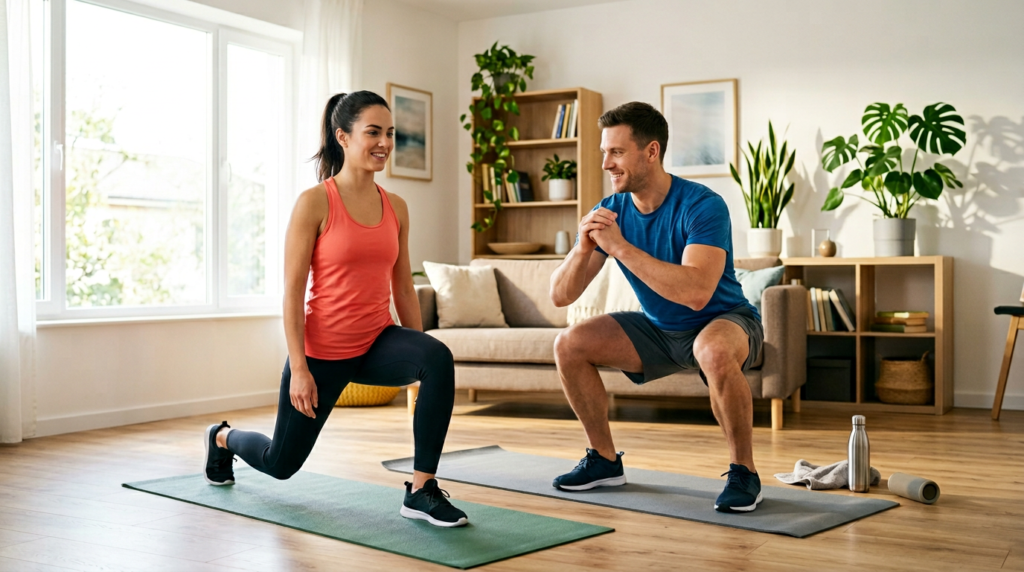
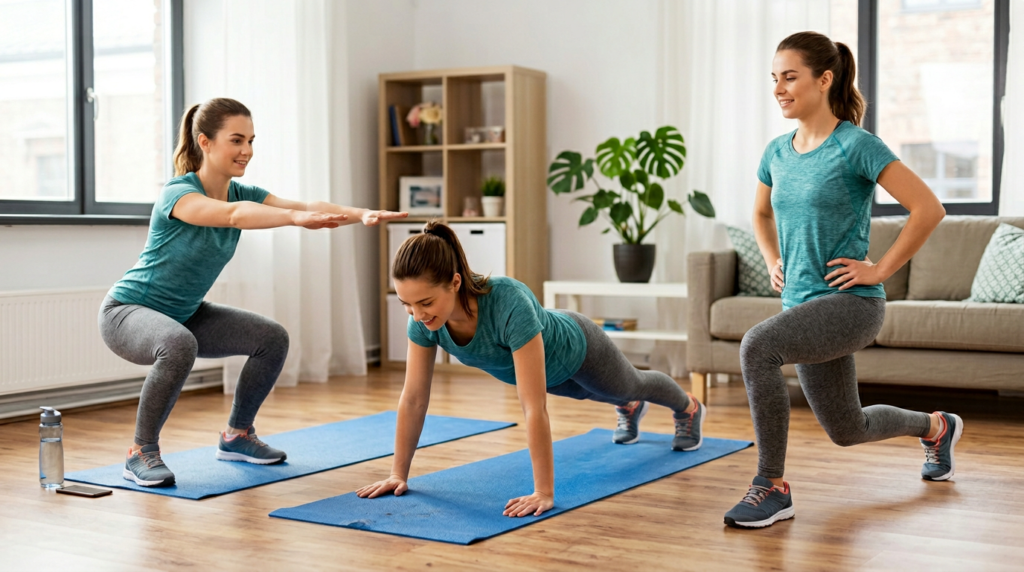
- Bodyweight exercises
- Resistance band training
- Consistency during busy days
Training Principles
Progressive overload
Progressive overload means increasing training demand over time.
Methods:
- Increase repetitions
- Increase sets
- Increase weight
- Reduce rest time slightly
Movement patterns
Exercises follow movement patterns:
- Push
- Pull
- Squat
- Hinge
- Core
Training all patterns increases energy use.
Recovery
Recovery supports adaptation.
Includes:
- Sleep
- Rest days
- Nutrition control
Weekly Training Structure
This program uses 5 training days per week.
Weekly plan
- Monday: Home workout A
- Tuesday: Gym workout A
- Wednesday: Cardio or walking
- Thursday: Home workout B
- Friday: Gym workout B
- Saturday: Walking or light activity
- Sunday: Rest
Home Workout A
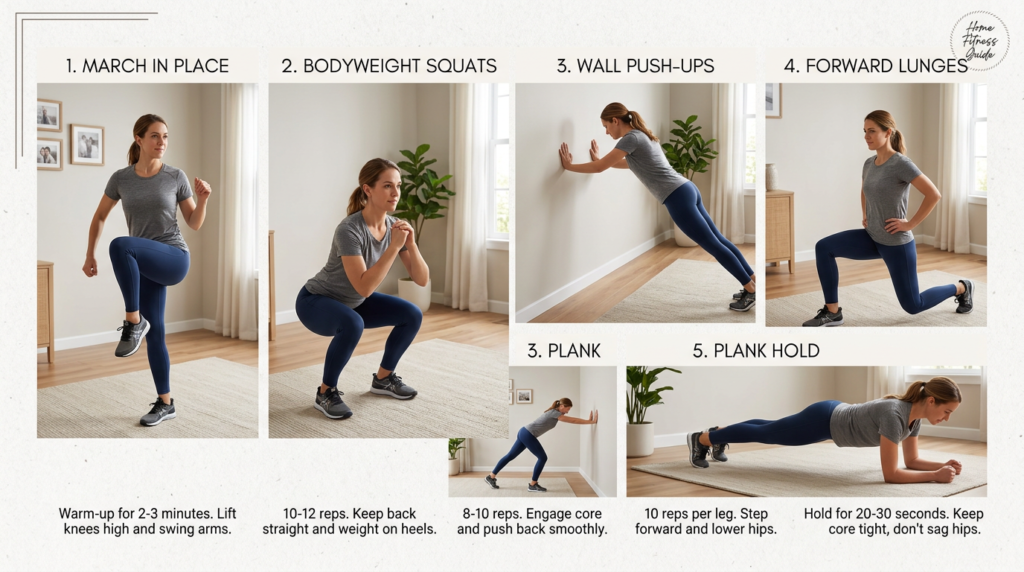
- Push-ups
- 3 sets × 8–15 reps
- Bodyweight squat
- 3 sets × 10–15 reps
- Resistance band row
- 3 sets × 10–15 reps
- Glute bridge
- 3 sets × 10–15 reps
- Plank
- 3 sets × 30–60 seconds
Home Workout B
- Split squat
- 3 sets × 8–10 reps each leg
- Dumbbell floor press
- 3 sets × 8–12 reps
- Band pull apart
- 3 sets × 10–15 reps
- Hip hinge movement
- 3 sets × 10–12 reps
- Crunch
- 3 sets × 10–15 reps
Gym Workout A
- Squat
- 3–4 sets × 8–10 reps
- Bench press
- 3 sets × 8–10 reps
- Lat pulldown
- 3 sets × 10–12 reps
- Walking lunge
- 2–3 sets × 10 reps each leg
- Plank
- 3 sets × 30–60 seconds
Gym Workout B
- Deadlift
- 3 sets × 5–8 reps
- Leg press
- 3 sets × 10–12 reps
- Dumbbell row
- 3 sets × 8–12 reps
- Shoulder press
- 3 sets × 8–12 reps
- Hanging knee raise
- 3 sets × 10–15 reps
Cardio Plan
Cardio increases energy use.
Options:
- Walking
- Cycling
- Rowing machine
- Treadmill incline walking
Weekly target
- 3 to 5 sessions
- 20 to 40 minutes per session
Exercise Purpose
Push-ups
Push-ups train upper body pushing movement.
Squat
Squat trains lower body and energy use.
Bench press
Bench press trains upper body strength.
Deadlift
Deadlift trains posterior chain muscles.
Row
Row trains back muscles and posture.
Warm-Up Routine
Warm-up prepares body for training.
Steps:
- 5–10 minutes walking or cycling
- Joint movement exercises
- Light set of first exercise
Rest Between Sets
- Heavy exercises: 90–180 seconds
- Medium exercises: 60–90 seconds
- Core exercises: 30–60 seconds
Nutrition for Weight Loss
Calorie control
Weight loss requires energy intake to be lower than output.
Methods:
- Reduce processed food
- Control portion size
- Track intake
Protein
Supports muscle retention.
Sources:
- Chicken
- Eggs
- Fish
- Beans
Daily intake:
- 1.6 to 2.2 g per kg body weight
Carbohydrates
Provide energy for training.
Sources:
- Rice
- Oats
- Potatoes
- Fruits
Fats
Support body function.
Sources:
- Nuts
- Olive oil
- Seeds
Water intake
- 2 to 3 liters per day
Recovery Plan
Sleep
- 7 to 9 hours per night
Rest days
- At least 2 days per week
Light activity
- Walking
- Stretching
Progressive Overload
Progress is measured through:
- Increased weight
- Increased repetitions
- Increased training volume
- Improved control
Example
- Week 1: squat 40 kg × 10
- Week 2: 40 kg × 11
- Week 3: 40 kg × 12
- Week 4: 45 kg × 10
Tracking Progress
Methods:
- Body weight (weekly)
- Waist measurement
- Training log
- Exercise performance
Example log
- Squat: 50 kg × 10, 9, 8
- Bench press: 40 kg × 10, 9, 8
- Row: 45 kg × 12, 10, 10
Common Mistakes
No consistency
Both home and gym sessions must be followed.
No calorie control
Weight loss depends on intake.
Skipping cardio
Cardio increases energy use.
Poor recovery
Recovery supports progress.
Weekly Example Plan
Monday
Home workout A
Tuesday
Gym workout A
Wednesday
Cardio
Thursday
Home workout B
Friday
Gym workout B
Saturday
Walking
Sunday
Rest
Long-Term Progress
After 8 to 12 weeks:
- Adjust training load
- Adjust calorie intake
- Increase cardio duration
- Add exercise variation
Safety Guidelines
- Use controlled movement
- Avoid excessive load early
- Maintain correct form
- Stop if pain occurs
- Ask for help when needed