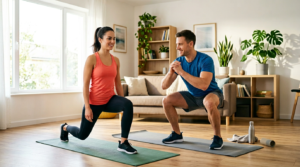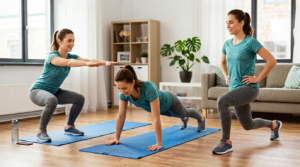
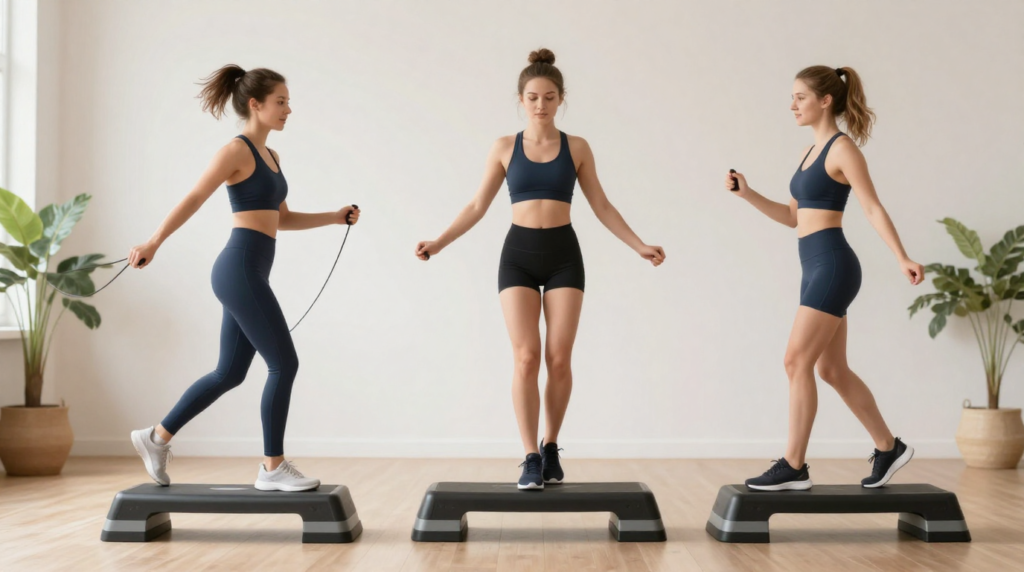

A beginner fitness routine supports weight loss and energy output through structured physical activity. This article presents a routine for beginners that uses bodyweight movement, walking, and basic training patterns. The focus is repetition, duration, and consistency.
Weight loss occurs when energy output exceeds energy intake. Energy levels improve when movement becomes regular. A beginner routine must follow a clear structure that can be repeated across days.
This article explains exercises, weekly structure, and tracking methods for beginners.
Understanding Weight Loss and Energy
Weight loss relates to calorie balance. Energy relates to body function during activity and rest.
Key points:
- Energy intake comes from food
- Energy output comes from movement and daily activity
- Bodyweight training increases output
- Walking increases daily output
Energy levels change when routine becomes consistent.
Beginner Routine Structure
A beginner routine uses three elements:
- Movement sessions
- Rest periods
- Progress tracking
Each session contains warm-up, main exercises, and cooldown.
Time range per session: 20 to 35 minutes.
Warm-Up Section
Warm-up prepares movement systems.
Steps:
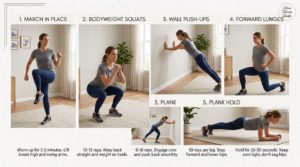
- March in place for 2 minutes
- Arm rotation for 1 minute
- Side step for 1 minute
- Light stretching for 2 minutes
Total time: 6 minutes
Exercise 1: Walking Session
Walking increases energy output and supports weight management.
Steps:
- Stand upright
- Move forward at steady pace
- Maintain breathing rhythm
Duration: 20 minutes
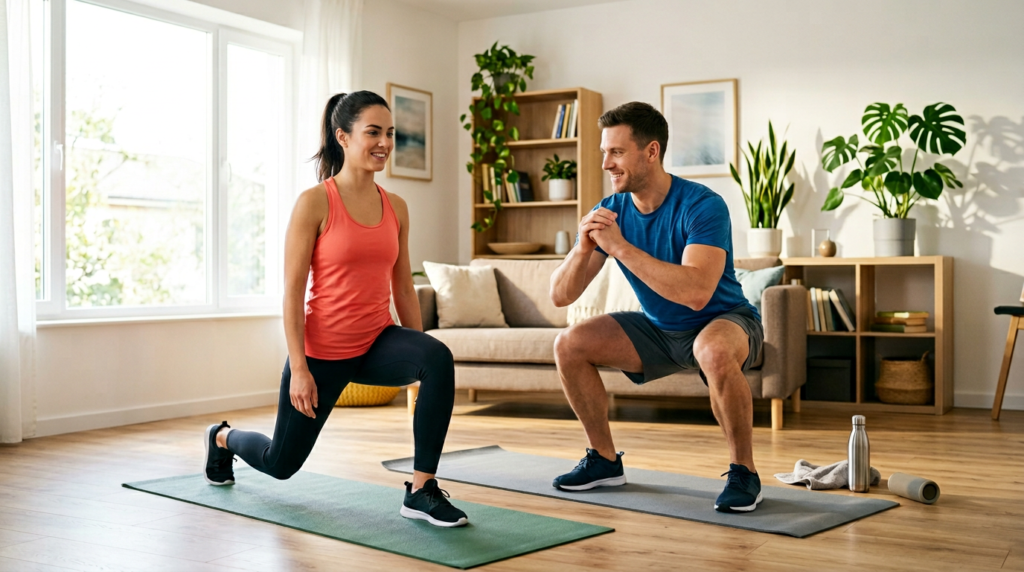
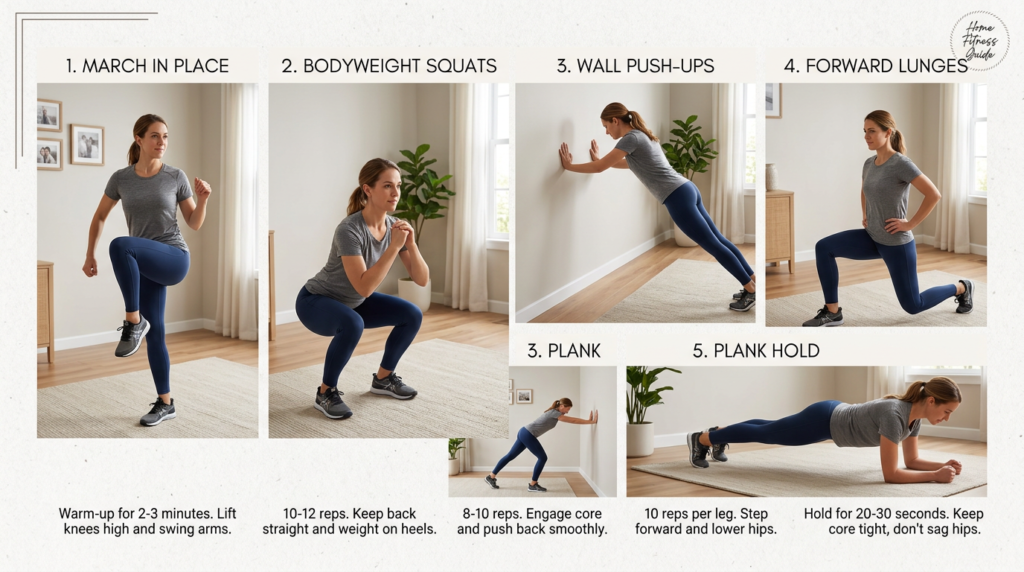
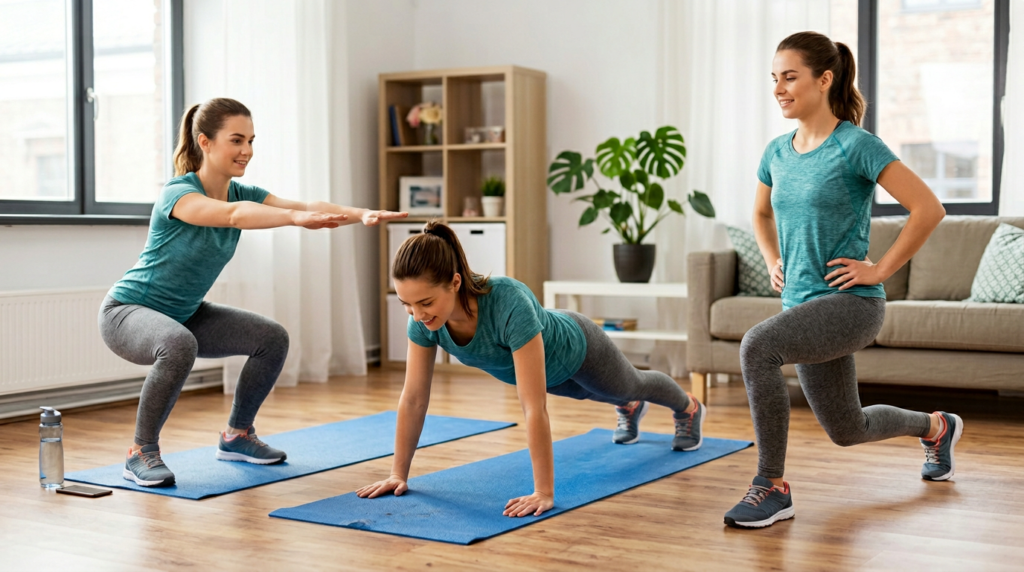
Exercise 2: Bodyweight Squats
Bodyweight squats use lower body muscle groups.
Steps:
- Stand with feet at shoulder width
- Lower body to knee level
- Return to standing
Sets: 3 Repetitions: 10 to 12
Exercise 3: Push Movement
Push movement uses upper body muscles.
Steps:
- Place hands on ground
- Extend legs back
- Lower body toward ground
- Return upward
Option: knee position modification
Sets: 3 Repetitions: 8 to 10
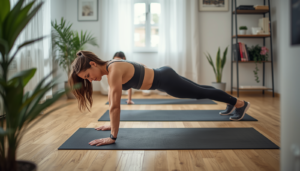
Exercise 4: Plank Hold
Plank hold uses core muscle groups.
Steps:
- Forearms on ground
- Body aligned
- Hold position
Duration: 20 seconds
Sets: 3
Exercise 5: Lunges
Lunges use leg movement patterns.
Steps:
- Step forward
- Lower rear knee
- Return position
- Alternate legs
Sets: 3 Repetitions: 10
Exercise 6: Step Movement
Step movement uses elevation change.
Steps:
- Step onto platform
- Step down
- Repeat alternate legs
Sets: 3 Repetitions: 10
Exercise 7: Glute Bridge
Glute bridge uses hip extension.
Steps:
- Lie on back
- Bend knees
- Lift hip section
- Lower back down
Sets: 3 Repetitions: 12
Exercise 8: Jump Movement
Jump movement increases heart rate.
Steps:
- Stand position
- Jump with arm movement
- Return stance
Duration: 30 seconds
Sets: 3
Exercise 9: Arm Movement
Arm movement supports shoulder function.
Steps:
- Extend arms
- Rotate forward
- Rotate backward
Duration: 30 seconds
Exercise 10: Stretching
Stretching supports muscle recovery.
Steps:
- Stretch upper body
- Stretch lower body
- Hold positions
Duration: 5 minutes
Weekly Routine Plan
Day 1: Walking + Squats + Push movement
Day 2: Lunges + Plank + Stretching
Day 3: Walking + Step movement
Day 4: Rest
Day 5: Squats + Jump movement + Plank
Day 6: Glute bridge + Arm movement + Walking
Day 7: Stretching
Progress Method
Progress depends on repetition increase and duration increase.
Week 1: base plan Week 2: repetition increase Week 3: duration increase Week 4: combined increase
Energy Management
Energy increases when movement becomes regular. Walking and bodyweight movement support energy output.
Hydration and food intake influence energy balance.
Common Errors
- Skipping warm-up
- Irregular schedule
- Incorrect movement form
- No rest period
Tracking System
Track:
- Duration
- Repetitions
- Days completed
Use written log or digital log.
Beginner Guidelines
- Start with low duration
- Maintain schedule
- Avoid overload
- Focus on repetition consistency
Frequently Asked Questions
How many days per week
3 to 5 days
How long per session
20 to 35 minutes
Can weight loss occur at home
Yes with routine consistency
Conclusion
A beginner fitness routine supports weight loss and energy through repeated movement and structured sessions. Consistency and tracking provide progress over time.