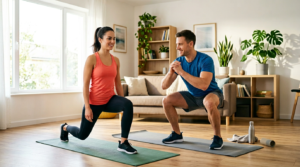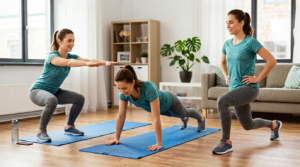

Fitness development without equipment uses body movement as resistance. This approach relies on bodyweight, repetition, and time. Many people start fitness with no access to equipment or gym space. A structured plan allows progress in strength, stamina, and mobility.
This article explains exercises, weekly planning, and progression methods. The focus is on consistency and repetition across days.
Fitness Without Equipment
Fitness without equipment uses body weight as resistance. Movement patterns include push, pull, squat, hinge, and carry simulation.
Key outcomes:
- Muscle activation through body weight
- Heart rate increase through movement
- Joint movement through repetition
- Energy use through activity
Start Method
Start with small duration sessions. Use repeated cycles of movement.
Steps:
- Select space
- Select time
- Begin warm-up
- Perform movement cycle
- End with rest
Warm-Up Section
Warm-up prepares movement systems.
Movements:
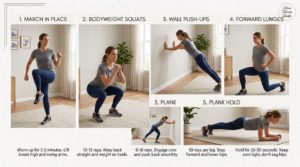
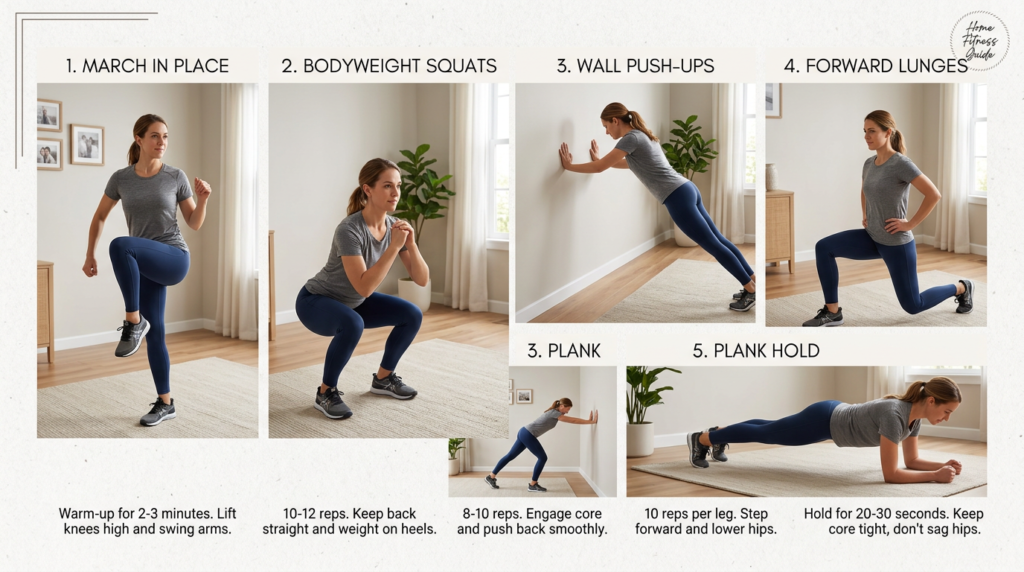
- March in place for two minutes
- Arm rotation for one minute
- Side step for one minute
- Body bend for one minute
Total time: five minutes
Exercise 1: Walking in Place
Walking in place increases heart rate and supports movement readiness.
Steps:
- Stand upright
- Lift one foot
- Switch foot
- Continue rhythm
Time: ten minutes
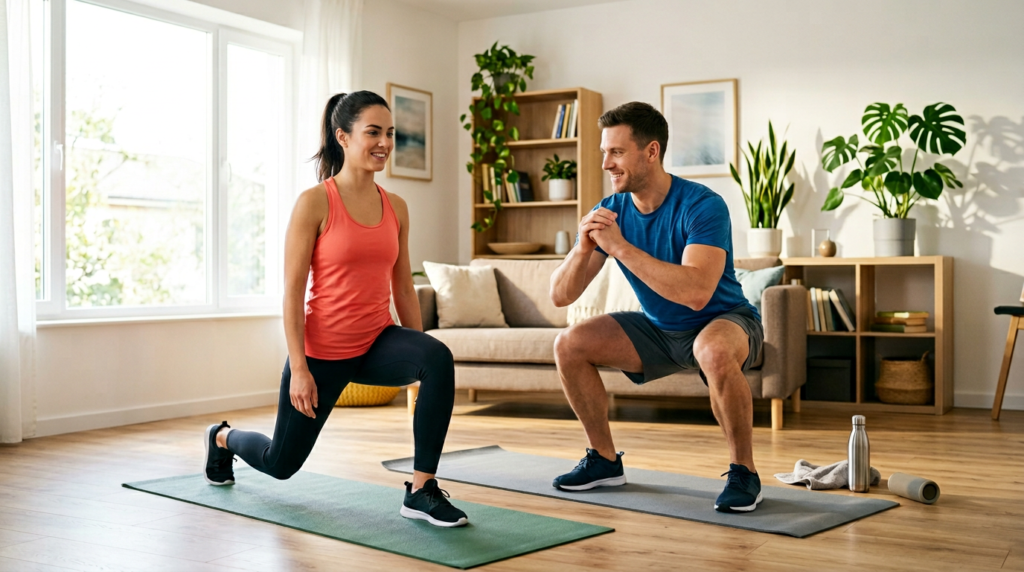
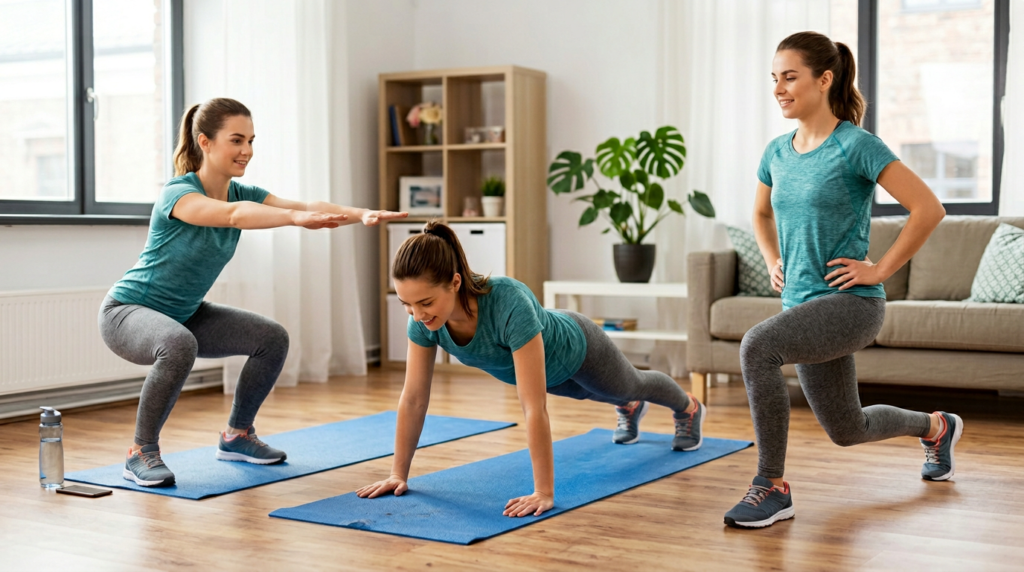
Exercise 2: Bodyweight Squat
Squat movement uses lower body muscles.
Steps:
- Stand with feet apart
- Lower body to knee level
- Return to standing
Repetitions: ten per set Sets: three
Exercise 3: Push Movement on Wall
Wall push movement uses upper body.
Steps:
- Stand facing wall
- Place hands on wall
- Move body toward wall
- Push back
Repetitions: ten per set Sets: three
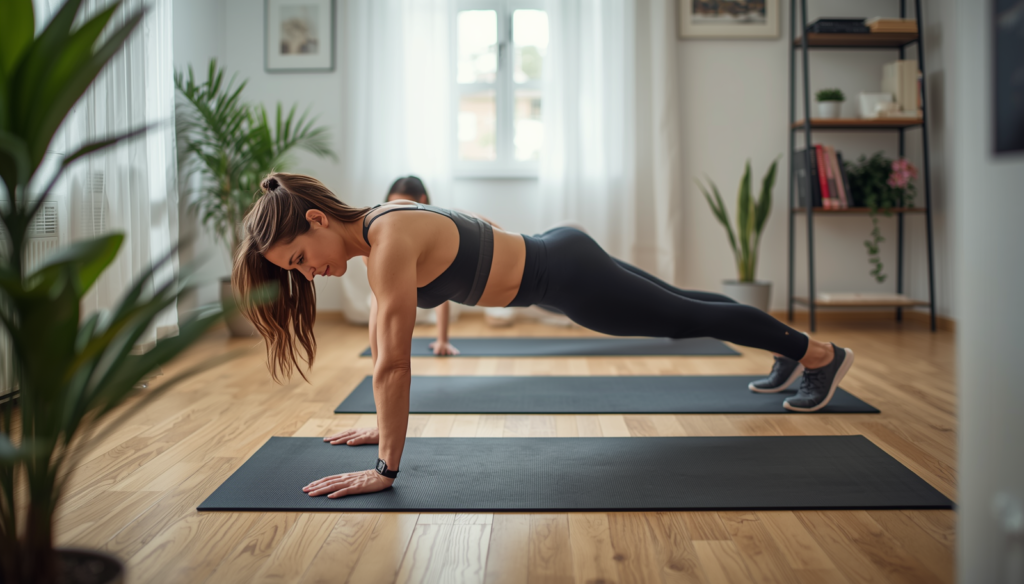
Exercise 4: Floor Push Movement
Floor push movement uses chest and arms.
Steps:
- Place hands on floor
- Extend legs
- Lower body
- Push upward
Repetitions: eight per set Sets: three
Exercise 5: Plank Hold
Plank hold uses core muscles.
Steps:
- Place forearms on floor
- Extend body
- Hold position
Time: twenty seconds Sets: three
Exercise 6: Lunge Movement
Lunge movement uses leg muscles.
Steps:
- Step forward
- Lower back knee
- Return position
- Switch leg
Repetitions: ten per set Sets: three
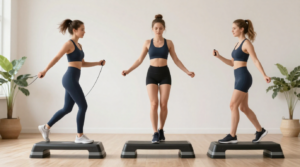
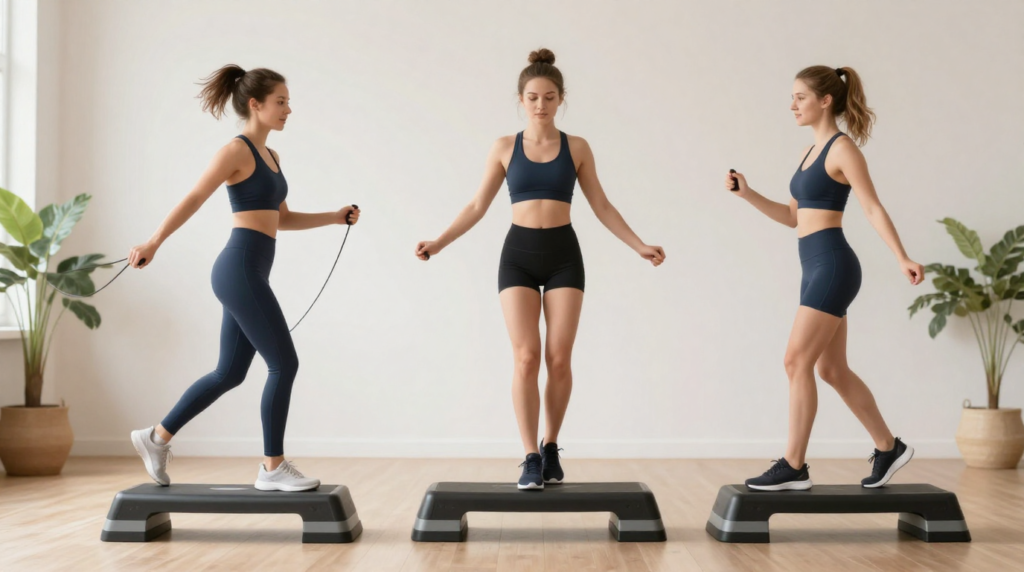
Exercise 7: Step Movement
Step movement uses elevation change.
Steps:
- Place foot on step
- Move body upward
- Return down
- Switch leg
Repetitions: ten per set Sets: three
Exercise 8: Hip Bridge
Hip bridge uses hip movement.
Steps:
- Lie on back
- Bend knees
- Lift hips
- Lower hips
Repetitions: twelve per set Sets: three
Exercise 9: Arm Rotation
Arm rotation uses shoulder joints.
Steps:
- Extend arms
- Rotate forward
- Rotate backward
Time: one minute
Exercise 10: Jump Movement
Jump movement increases heart rate.
Steps:
- Stand position
- Jump and open legs
- Return position
Time: thirty seconds Sets: three
Exercise 11: Side Step
Side step supports coordination.
Steps:
- Step right
- Step left
- Maintain rhythm
Time: two minutes
Exercise 12: Floor Hold
Floor hold uses core and back.
Steps:
- Lie on stomach
- Lift upper body
- Hold position
Time: fifteen seconds Sets: three
Weekly Plan
Day 1
- Walking in place
- Squat
- Push movement
Day 2
- Lunge
- Plank
- Hip bridge
Day 3
- Step movement
- Arm rotation
Day 4 Rest
Day 5
- Squat
- Jump movement
- Floor push movement
Day 6
- Side step
- Floor hold
Day 7 Rest or stretch
Progress Method
Progress uses increase in repetition or time.
Week 1: base level Week 2: increase repetition Week 3: increase time Week 4: combine increase
Tracking Method
Track:
- Time per session
- Repetitions per set
- Days completed
Use written log or digital log.
Nutrition Notes
Food intake supports movement output.
- Water intake supports movement
- Meal timing supports recovery
- Protein intake supports muscle repair
Common Errors
- Skipping warm-up
- Irregular schedule
- Incorrect movement form
- No rest
Safety Notes
- Maintain control during movement
- Stop if discomfort occurs
- Use stable surface
Equipment Note
No equipment required. Optional mat can be used.
FAQ
How long per session
Twenty to thirty minutes
How many days per week
Three to five days
Can fitness improve without equipment
Yes through repetition and consistency