

This article explains a step by step muscle building guide for new gym members. It focuses on how to start training, how to use gym equipment, how to structure workouts, how to progress, and how to manage recovery and nutrition.
Muscle building requires repeated resistance training over time. A new gym member benefits from a clear system that removes confusion and provides structure from the first day.
This guide breaks the process into steps so training can be followed in order.
Step 1: Understand Muscle Building Process
Muscle grows when muscle fibers are exposed to resistance and then recover.
Three main factors control muscle growth:
- Training load
- Recovery time
- Nutrition intake
If any factor is missing, progress slows.
Step 2: Learn Movement Patterns
All gym exercises follow movement patterns.
Push
Examples:
- Bench press
- Shoulder press
- Push-ups
Pull
Examples:
- Lat pulldown
- Row
- Pull-up
Squat
Examples:
- Squat
- Leg press
Hinge
Examples:
- Deadlift
- Romanian deadlift
Core
Examples:
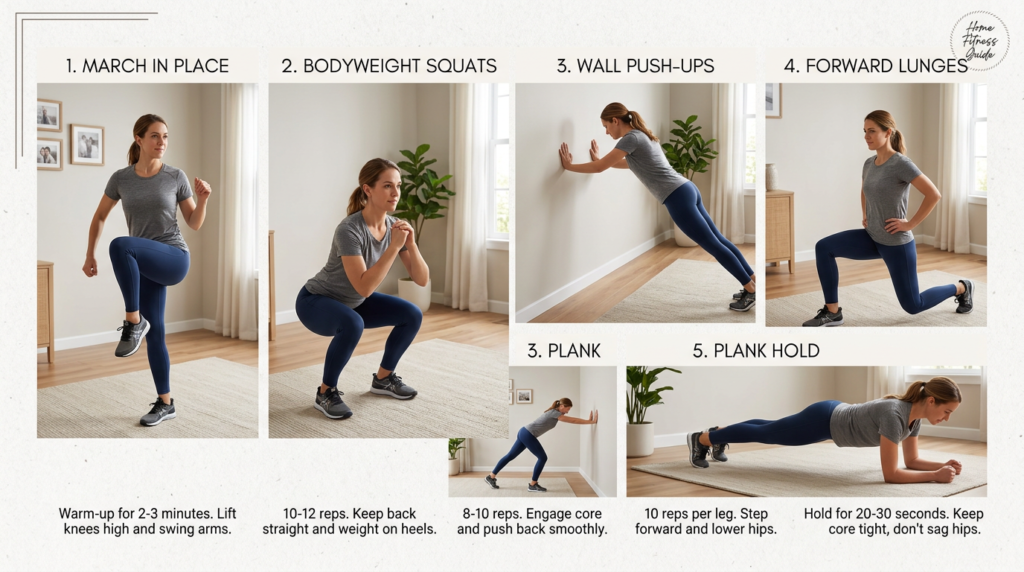
- Plank
- Leg raise
Training all patterns creates balanced strength.
Step 3: Start With Weekly Plan
New gym members should train 3 days per week.
Schedule
- Monday: Full body A
- Wednesday: Full body B
- Friday: Full body A
Next week alternates:
- Monday: Full body B
- Wednesday: Full body A
- Friday: Full body B
Step 4: Full Body Workout A
- Squat
- 3 sets × 8–10 reps
- Bench press
- 3 sets × 8–10 reps
- Lat pulldown
- 3 sets × 10–12 reps
- Shoulder press
- 2–3 sets × 8–12 reps
- Plank
- 3 sets × 30–60 seconds
Step 5: Full Body Workout B
- Deadlift
- 3 sets × 5–8 reps
- Leg press
- 3 sets × 10–12 reps
- Dumbbell row
- 3 sets × 8–12 reps
- Incline dumbbell press
- 3 sets × 8–10 reps
- Hanging knee raise
- 3 sets × 10–15 reps
Step 6: Learn Proper Form
Form must be learned before increasing weight.
Rules:
- Move with control
- Use full range of motion
- Avoid fast repetition
- Start with light load
Good form supports long-term progress.
Step 7: Warm-Up Before Training
Warm-up prepares the body.
Steps:
- 5–10 minutes walking or cycling
- Joint movement exercises
- Light set of first exercise
Example:
- Squat with light weight before working sets
Step 8: Rest Between Sets
Rest supports performance.
- Heavy exercises: 90–180 seconds
- Medium exercises: 60–90 seconds
- Core exercises: 30–60 seconds
Step 9: Progressive Overload
Progress is created by increasing training demand.
Methods:
- Increase weight
- Increase repetitions
- Increase sets
- Improve control
Example
- Week 1: squat 40 kg × 8
- Week 2: 40 kg × 9
- Week 3: 40 kg × 10
- Week 4: 45 kg × 8
Step 10: Add Cardio
Cardio supports fitness and recovery.
Options:
- Walking
- Cycling
- Rowing machine
Weekly target
- 2 to 3 sessions
- 20 to 30 minutes
Step 11: Recovery Plan
Recovery supports muscle repair.
Sleep
- 7 to 9 hours per night
Rest days
- At least 2 days per week
Light activity
- Walking
- Stretching
Step 12: Nutrition Basics
Protein
Supports muscle repair.
Sources:
- Chicken
- Eggs
- Fish
- Beans
Daily intake:
- 1.6 to 2.2 g per kg body weight
Carbohydrates
Provide training energy.
Sources:
- Rice
- Oats
- Potatoes
- Fruits
Fats
Support body function.
Sources:
- Nuts
- Olive oil
- Seeds
Water
- 2 to 3 liters per day
Step 13: Track Progress
Tracking helps measure improvement.
Methods:
- Weight lifted
- Repetitions completed
- Body weight
- Training log
Example log
- Squat: 50 kg × 10, 9, 8
- Bench press: 40 kg × 10, 9, 8
- Row: 45 kg × 12, 10, 10
Step 14: Avoid Common Mistakes
No consistency
Training must follow schedule.
No progression
Weight or reps must increase over time.
Skipping rest
Recovery is required.
Poor form
Form must be controlled before load increase.
Step 15: Weekly Example Plan
Monday
Workout A
Wednesday
Workout B
Friday
Workout A
Next week alternates.
Step 16: Long-Term Progress
After 8 to 12 weeks:
- Increase training load
- Add exercise variation
- Adjust repetition range
- Move to split training program
Step 17: Safety Guidelines
- Use controlled movement
- Avoid fast lifting
- Maintain proper form
- Stop if pain occurs
- Ask for help when needed