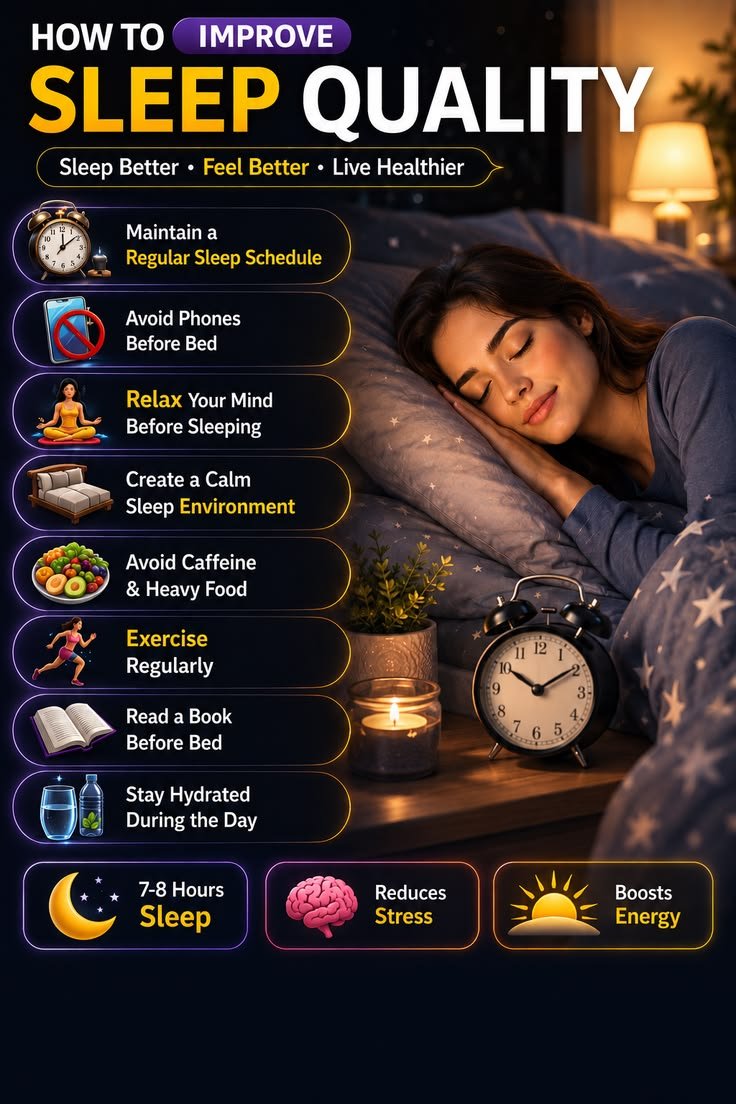
Introduction
Sleep is one of the most important pillars of health, yet it is often overlooked in modern life. Many people focus on diet and exercise while sacrificing sleep due to work, social activities, entertainment, or stress. However, quality sleep is essential for physical health, mental well-being, productivity, and overall quality of life.
Sleep is not simply a period of rest. During sleep, the body performs critical functions that help repair tissues, strengthen the immune system, consolidate memories, regulate hormones, and restore energy levels. Without sufficient sleep, even the healthiest diet and exercise routine may not deliver optimal results.
This comprehensive guide explores the science of sleep, the benefits of quality rest, common sleep problems, and practical strategies for improving sleep naturally.
Why Sleep Is Important
Sleep affects nearly every system in the human body.
Physical Recovery
During sleep, the body repairs damaged tissues and muscles.
Benefits include:
Faster recovery
Improved muscle growth
Better physical performance
Brain Function
Sleep helps the brain process information and strengthen memory.
Benefits include:
Improved concentration
Better learning ability
Enhanced problem-solving skills
Emotional Well-Being
Adequate sleep helps regulate emotions and stress levels.
Benefits include:
Better mood
Reduced irritability
Improved emotional resilience
Immune Support
Quality sleep strengthens the immune system and helps the body fight infections.
How Much Sleep Do You Need?
Sleep requirements vary by age.
Recommended Sleep Duration
Adults (18–64 years)
7–9 hours per night
Older Adults (65+)
7–8 hours per night
Teenagers
8–10 hours per night
Children
9–12 hours or more depending on age
Most healthy adults perform best with around eight hours of sleep nightly.
The Sleep Cycle Explained
Sleep consists of several stages that repeat throughout the night.
Stage 1: Light Sleep
The transition between wakefulness and sleep.
Stage 2: Stable Sleep
Heart rate slows and body temperature decreases.
Stage 3: Deep Sleep
This stage is important for:
Physical recovery
Immune function
Growth and repair
REM Sleep
REM (Rapid Eye Movement) sleep supports:
Learning
Memory
Emotional processing
Creativity
A healthy sleep cycle includes multiple rounds of all stages.
Signs of Poor Sleep
Many people underestimate the impact of inadequate sleep.
Common signs include:
Daytime fatigue
Difficulty concentrating
Mood swings
Frequent illness
Low motivation
Poor memory
Increased stress
If these symptoms occur regularly, sleep quality may need improvement.
Health Benefits of Quality Sleep
Improved Heart Health
Healthy sleep patterns may support:
Normal blood pressure
Better circulation
Reduced cardiovascular risk
Better Weight Management
Sleep influences hormones that regulate hunger and appetite.
Poor sleep may increase cravings for:
Sugary foods
Processed snacks
High-calorie meals
Enhanced Athletic Performance
Athletes often experience:
Better endurance
Faster recovery
Improved reaction times
when getting sufficient sleep.
Stronger Mental Health
Sleep plays a major role in emotional stability and stress management.
Common Causes of Sleep Problems
Stress and Anxiety
Mental stress is one of the leading causes of poor sleep.
Common sources include:
Work pressure
Financial concerns
Family responsibilities
Excessive Screen Time
Electronic devices emit blue light that may interfere with melatonin production.
Examples include:
Smartphones
Tablets
Computers
Televisions
Poor Sleep Habits
Irregular sleep schedules can disrupt natural sleep rhythms.
Caffeine Consumption
Excess caffeine may make it difficult to fall asleep.
Sources include:
Coffee
Energy drinks
Certain soft drinks
Lack of Physical Activity
Regular exercise supports healthy sleep patterns.
Creating the Perfect Sleep Environment
Your bedroom environment significantly affects sleep quality.
Keep the Room Cool
A slightly cool room often promotes better sleep.
Reduce Noise
Use:
Earplugs
White noise machines
Quiet fans
if needed.
Minimize Light
Darkness supports melatonin production.
Consider:
Blackout curtains
Sleep masks
Invest in Comfortable Bedding
A supportive mattress and comfortable pillows can improve sleep quality.
Establishing a Healthy Sleep Routine
Consistency is essential for better sleep.
Maintain a Regular Schedule
Go to bed and wake up at the same time daily.
Create a Relaxing Bedtime Routine
Examples include:
Reading
Stretching
Meditation
Taking a warm shower
Avoid Late-Night Stimulation
Reduce exposure to:
Bright screens
Intense exercise
Stressful activities
before bedtime.
Foods That Support Better Sleep
Certain foods may help promote relaxation and sleep.
Bananas
Contain magnesium and potassium.
Almonds
Provide healthy fats and magnesium.
Oatmeal
Contains nutrients that may support relaxation.
Chamomile Tea
Often used as a calming bedtime beverage.
Kiwi
Some studies suggest kiwi may support sleep quality.
Foods to Avoid Before Bed
Caffeine
Avoid several hours before bedtime.
Heavy Meals
Large meals may cause discomfort and indigestion.
Sugary Foods
Can increase energy levels and disrupt sleep.
Alcohol
Although alcohol may cause drowsiness, it often reduces sleep quality later in the night.
The Relationship Between Exercise and Sleep
Regular exercise is one of the most effective natural sleep aids.
Benefits include:
Faster sleep onset
Improved sleep quality
Longer sleep duration
Ideal activities include:
Walking
Cycling
Swimming
Strength training
Yoga
Managing Stress for Better Sleep
Reducing stress can significantly improve sleep quality.
Deep Breathing Exercises
Slow breathing helps calm the nervous system.
Meditation
Mindfulness meditation may reduce racing thoughts.
Journaling
Writing down concerns before bed can clear the mind.
Gratitude Practice
Focusing on positive experiences may promote relaxation.
Sleep and Productivity
Quality sleep improves:
Focus
Decision-making
Creativity
Learning ability
Individuals who sleep well often perform better at work, school, and daily tasks.
Sleep and Weight Loss
Many people overlook sleep when trying to lose weight.
Poor sleep can:
Increase hunger hormones
Reduce fullness hormones
Increase cravings
Combining healthy sleep with proper nutrition and exercise supports weight management.
Natural Tips to Fall Asleep Faster
Read a Book
Choose relaxing material.
Listen to Calm Music
Soft music may help reduce stress.
Practice Relaxation Techniques
Examples include:
Progressive muscle relaxation
Deep breathing
Guided meditation
Limit Naps
Long daytime naps can interfere with nighttime sleep.
Common Sleep Myths
Myth: Everyone Needs Exactly 8 Hours
Sleep needs vary between individuals.
Myth: Alcohol Improves Sleep
Alcohol often disrupts deep sleep stages.
Myth: You Can Catch Up Completely on Sleep
While extra sleep helps recovery, chronic sleep deprivation may have lasting effects.
Long-Term Benefits of Healthy Sleep Habits
Consistent quality sleep can contribute to:
Better health
Greater energy
Improved mood
Enhanced productivity
Stronger immunity
Better quality of life